











GCC Compliance Overview

GCC tax records for every legal entity

This page helps groups in the UAE and Saudi Arabia keep VAT, corporate tax and e-invoicing records right for each legal entity. HYP ERP keeps them in one connected system, so each country's filing starts from the same reliable data.

Finance and HR teams reviewing compliance reports

What is HYP ERP GCC Compliance?

GCC Compliance is the set of HYP ERP accounting, invoicing, payroll and reporting capabilities that support country-specific tax and regulatory processes in the GCC. It covers UAE VAT records and e-invoicing, corporate tax preparation, Saudi ZATCA e-invoicing with FATOORA integration, multi-entity accounting and workforce administration, with each legal entity configured for its own requirements.

Groups expanding from the UAE into Saudi Arabia and other GCC markets often hold tax data in separate sales, purchasing and spreadsheet files, with a different account structure in each entity. Each country also sets its own invoice rules. HYP ERP brings those records into one financial environment, so finance prepares tax information from transactions instead of rebuilding it by hand at period end.

HYP ERP
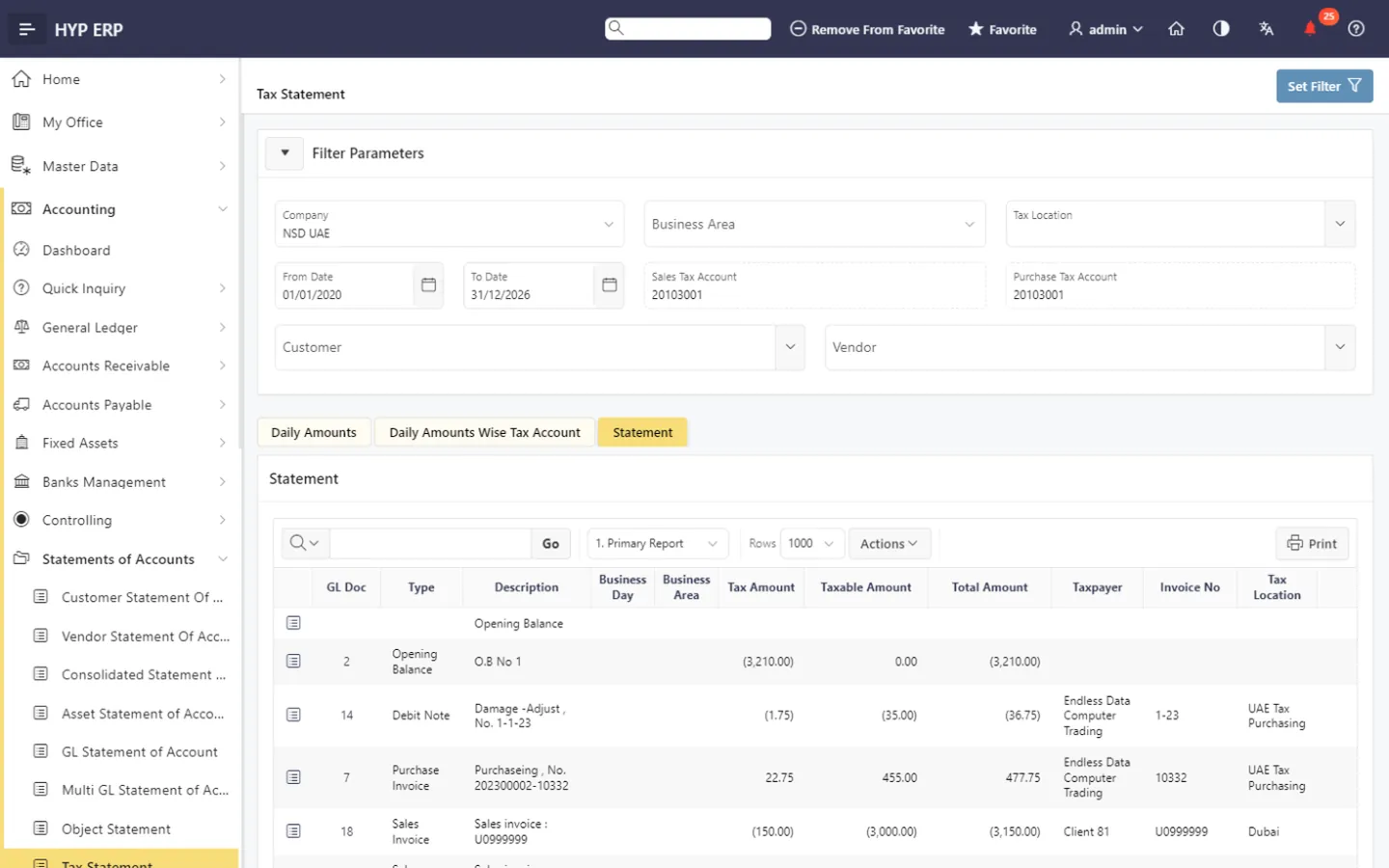
GCC Compliance Overview screen in HYP ERP

GCC compliance at a glance

Updated 28 October 2026

Who it applies to
Groups with legal entities in the UAE, Saudi Arabia and other GCC markets. Each country sets its own invoice and tax rules.
Rates
VAT is 5% in the UAE and 15% in Saudi Arabia. UAE Corporate Tax is 9% on taxable income above AED 375,000.
VAT return deadlines
UAE: by the 28th day of the month after the period. Saudi Arabia: by the last day of the month after; monthly above SAR 40 million.
E-invoicing dates
UAE: 1 January 2027 for revenue of AED 50 million or more, 1 July 2027 below. Saudi Wave 25: integrated by 1 February 2027.
Where records sit
Saudi VAT records, and the server holding them, must be in the Kingdom. UAE e-invoices may be stored anywhere since 1 October 2026.
How HYP ERP helps
One financial environment for every entity: UAE VAT and e-invoicing, corporate tax records, ZATCA Phase 2 certified e-invoicing and multi-entity control.

What each GCC country requires, rule by rule

What the rule requiresHow HYP ERP handles it
UAE: file the VAT return and pay by the 28th day of the month after each period.Records VAT on invoices, credit notes and party details, with tax statements to reconcile before the return.
UAE: send B2B and B2G e-invoices through one accredited service provider over Peppol.Ready for UAE e-invoicing through ASP partner Infinite IT Solutions, from the same records used for VAT.
UAE: keep Corporate Tax records for at least 7 years after the tax period.Keeps the ledger, expense, fixed asset and intercompany records advisers start from for tax adjustments.
Saudi Arabia: clear standard invoices and report simplified invoices to FATOORA within 24 hours.Issues standard and simplified e-invoices and exchanges them with FATOORA as a ZATCA Phase 2 certified solution.
Saudi Arabia: file VAT by the last day of the following month; monthly above SAR 40 million.Records taxable sales, purchases, returns and adjustments in connected modules, then reviews tax statements and ledgers together.
Test each legal entity in a group separately against e-invoicing revenue thresholds.Company-level accounting with intercompany entries and account mapping keeps each entity's tax records separate.
UAE: pay salaries through WPS by the first day of the following month.Keeps HR, payroll, end-of-service and PRO records in the same system as finance.

Readiness checklist for multi-country groups

  • Set tax details for each legal entity, customer and supplier.
  • Test each entity's revenue separately against the UAE e-invoicing threshold.
  • Appoint a UAE ASP by 31 March 2027 for entities below AED 50 million.
  • Check whether each Saudi entity falls in ZATCA Wave 25.
  • Host Saudi VAT records in the Kingdom, or document why the exception applies.
  • Reconcile the VAT control account to the VAT report every month.
  • Clear rejected and unreported e-invoices before locking each period.
  • Accrue corporate tax or zakat monthly, ahead of the annual return.

GCC tax compliance ERP capabilities

UAE VAT records and e-invoicing

Record sales and purchase invoices, credit notes, and customer and supplier tax details, then review tax statements and reports. HYP ERP is ready for the UAE e-invoicing system, which is Peppol-based and runs through an Accredited Service Provider (ASP); HYP's ASP partner is Infinite IT Solutions.

Explore UAE VAT records and e-invoicing

HYP ERP
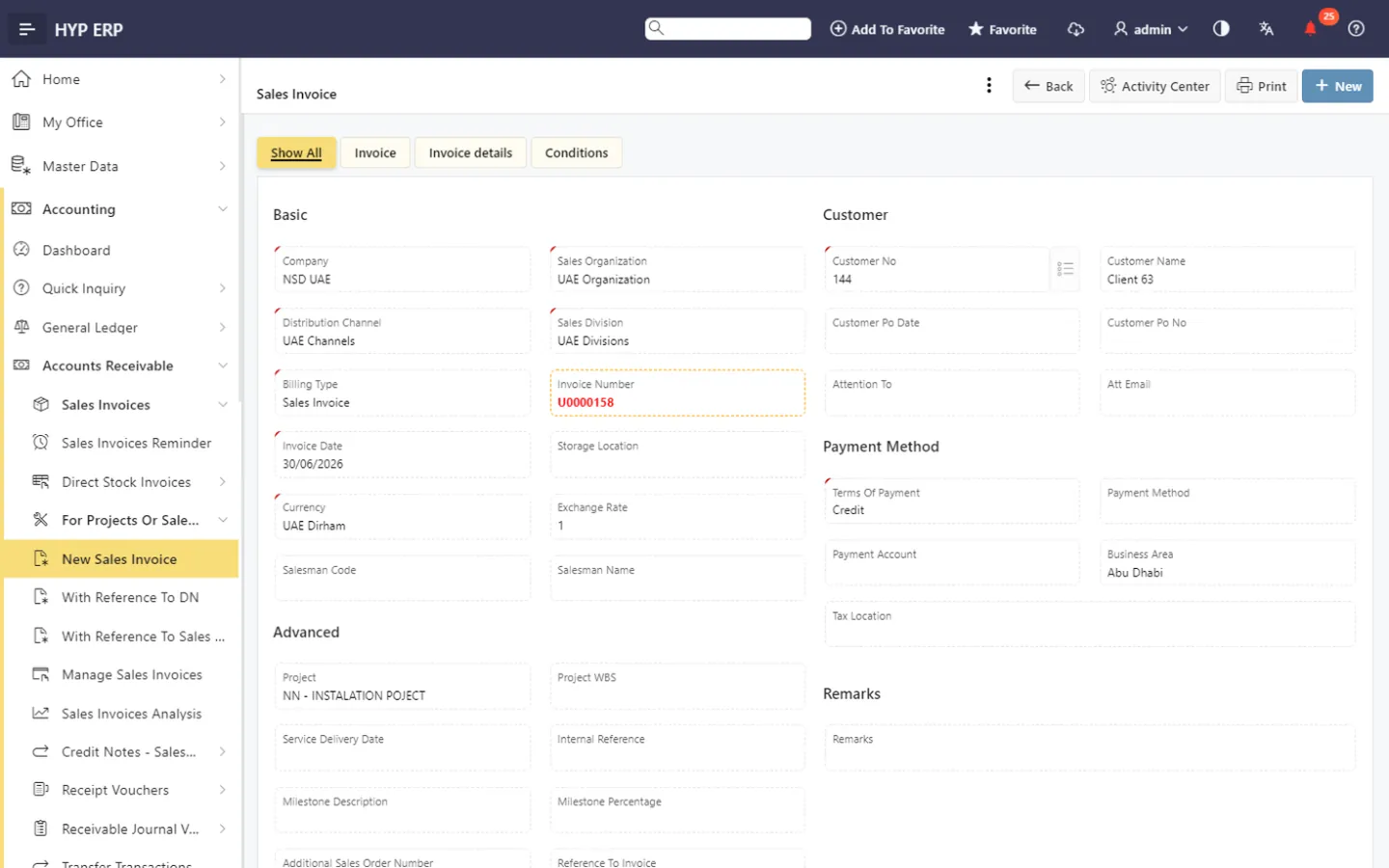
UAE VAT records and e-invoicing screen in HYP ERP

Corporate tax preparation

Give tax advisers the general ledger, expense, fixed asset and intercompany records, plus financial reports, that they start from when working out corporate tax adjustments.

Explore Corporate tax preparation

HYP ERP
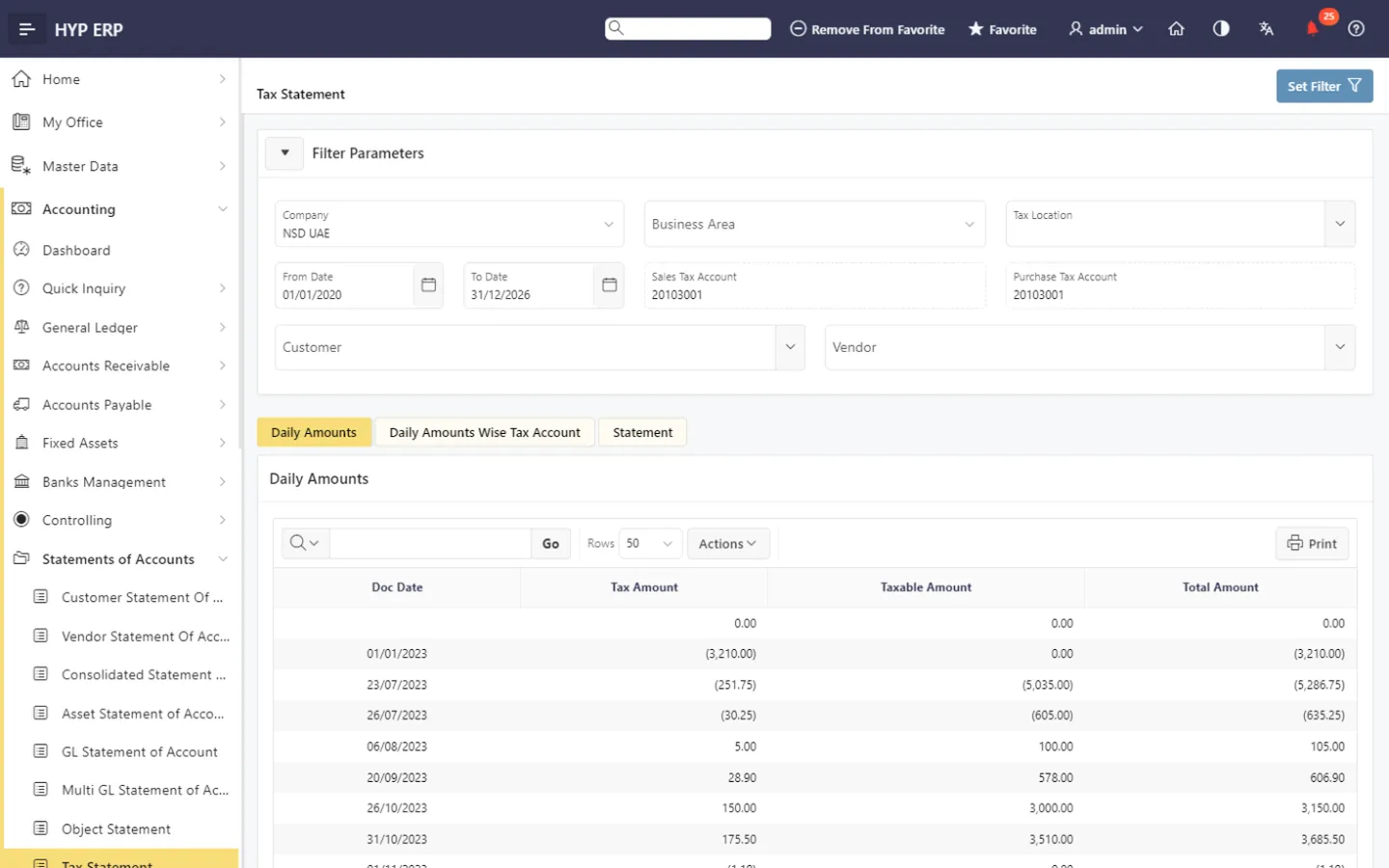
Corporate tax preparation screen in HYP ERP

Saudi ZATCA e-invoicing

Issue standard and simplified electronic invoices with QR codes and exchange them with FATOORA through HYP ERP's ZATCA Phase 2 certified e-invoicing solution for Saudi entities.

Explore Saudi ZATCA e-invoicing

HYP ERP
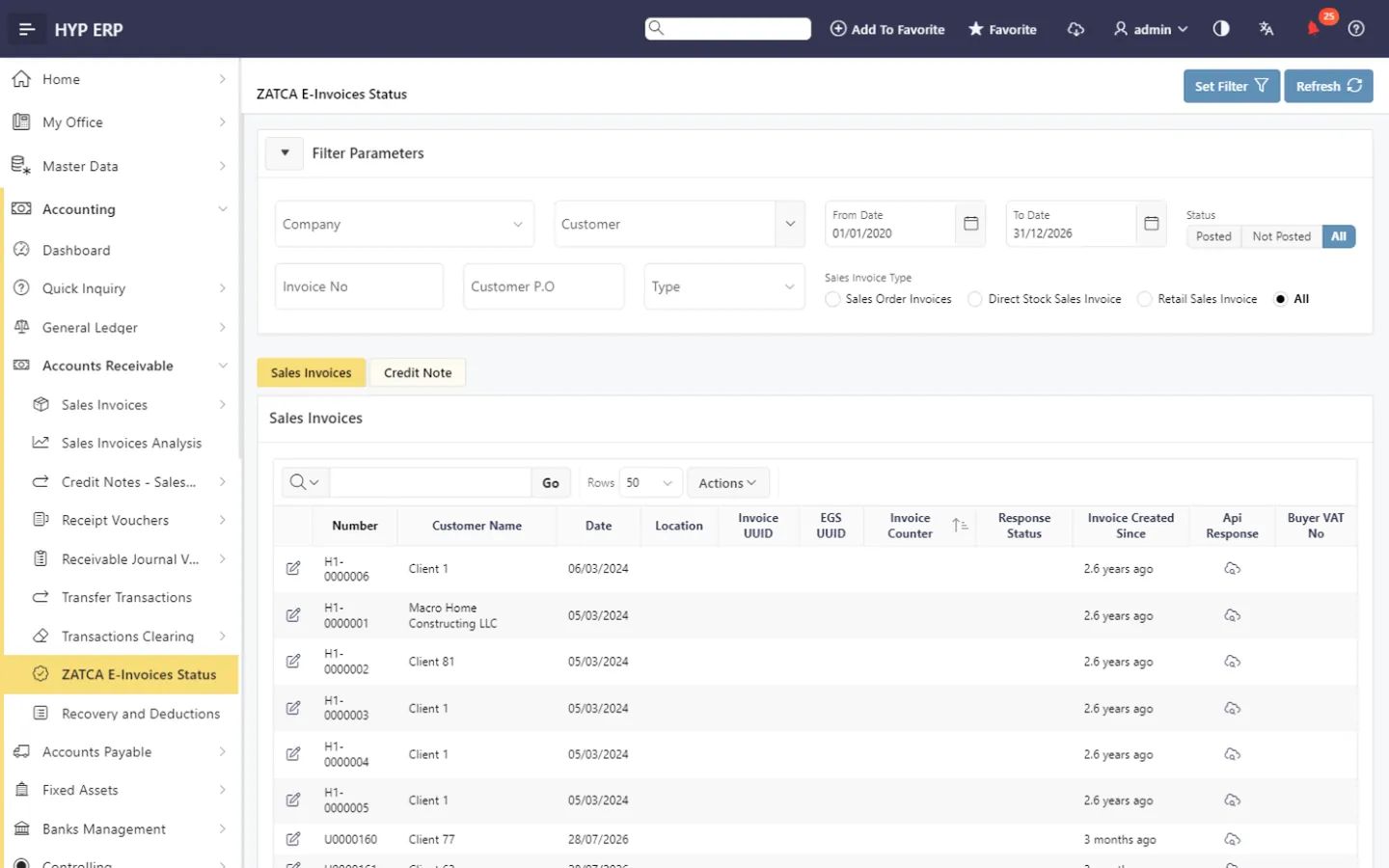
Saudi ZATCA e-invoicing screen in HYP ERP

Multi-entity financial control

Run company-level accounting with intercompany entries, account mapping and selected consolidated reporting for groups that operate several legal entities.

HYP ERP
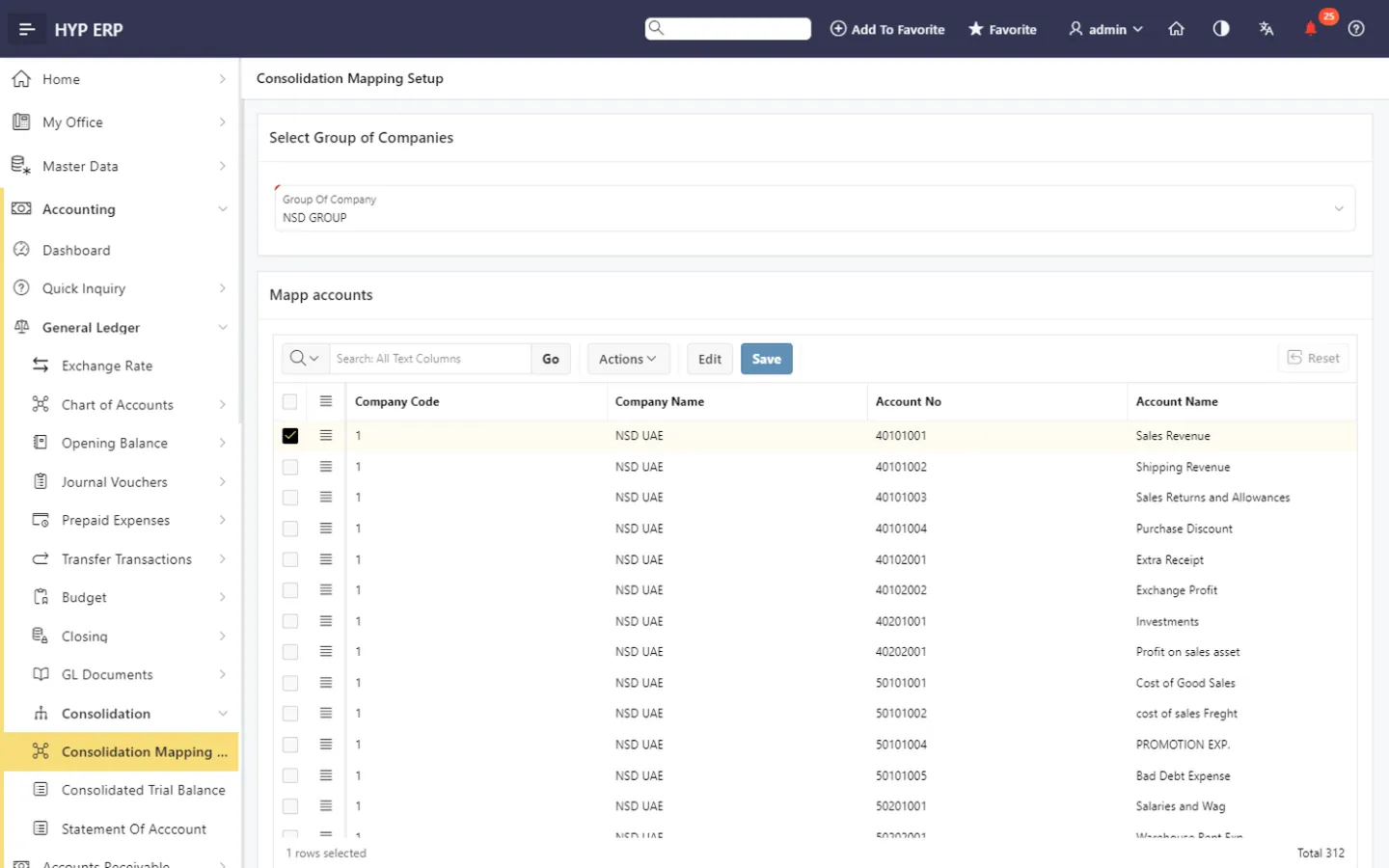
Multi-entity financial control screen in HYP ERP

Payroll and workforce administration

Keep HR, payroll, end-of-service and PRO records in the same system as finance for operations across the region.

HYP ERP
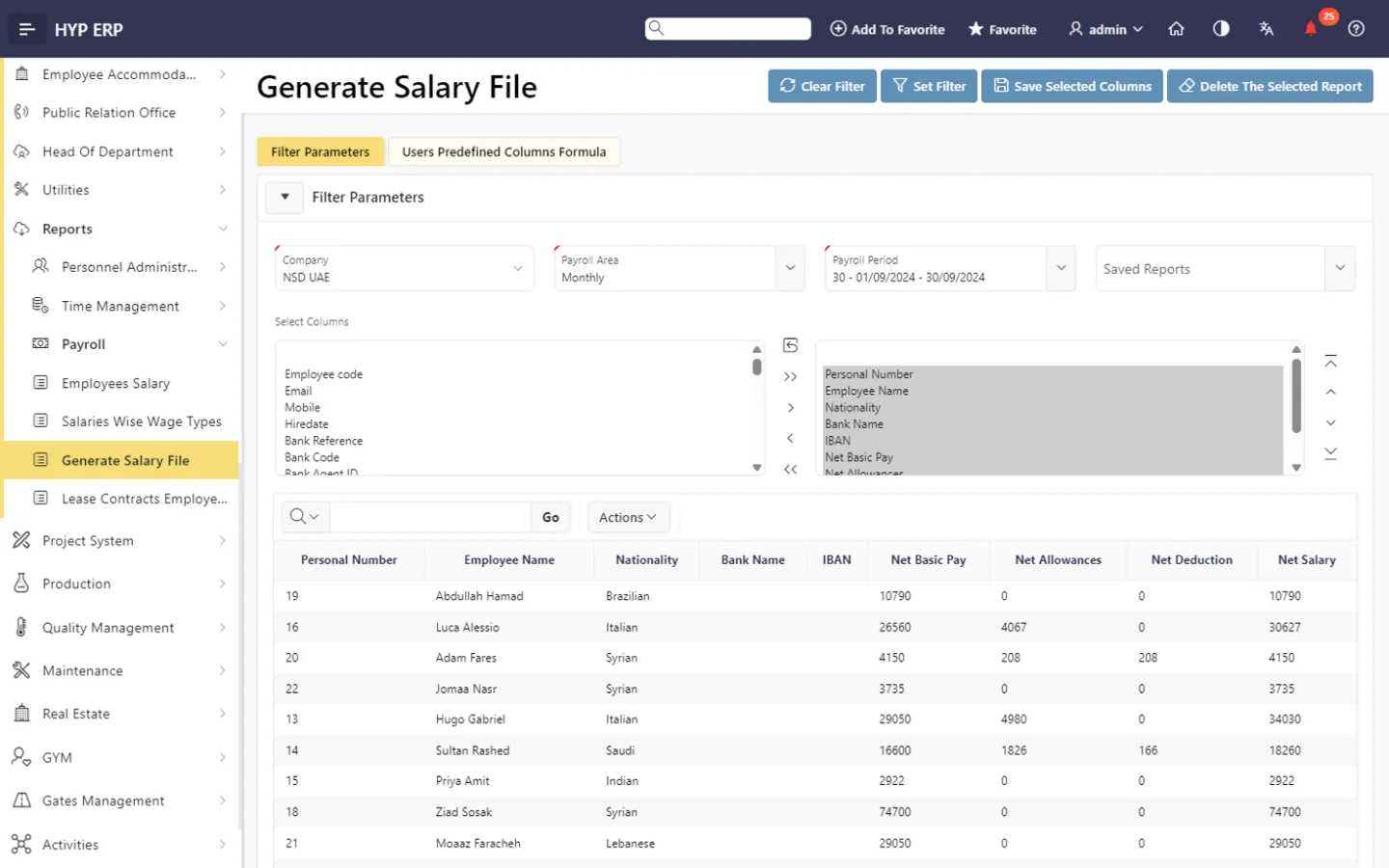
Payroll and workforce administration screen in HYP ERP

Governance and reporting

Route transactions through approval workflows, then review financial statements and account inquiries built from structured, approved entries.

HYP ERP
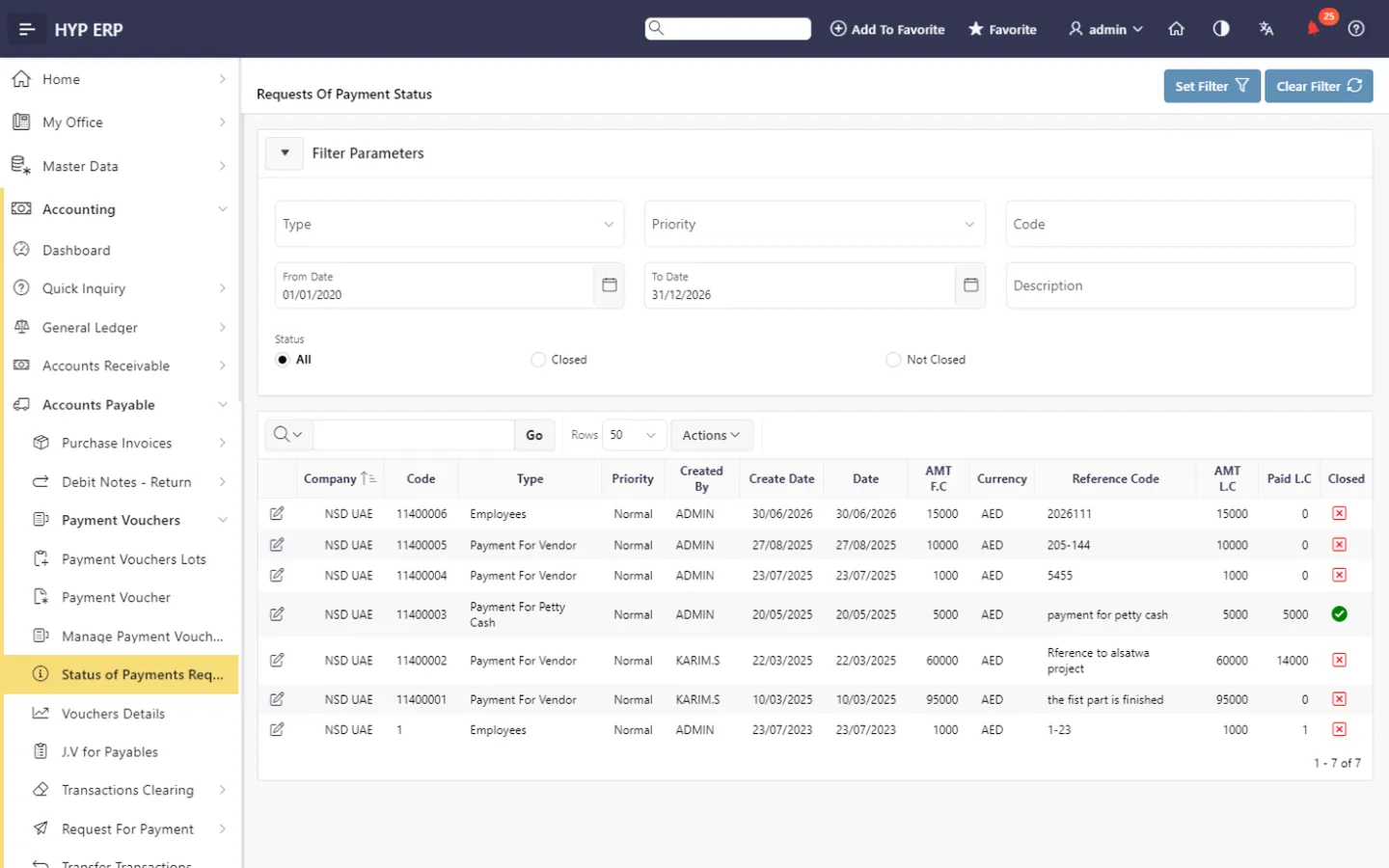

Governance and reporting screen in HYP ERP

How GCC compliance runs inside HYP ERP

  1. Configure

    Set company, customer, supplier and transaction tax information for each legal entity.

  2. Transact

    Record taxable sales, purchases, returns and adjustments in connected modules.

  3. Reconcile

    Review tax statements, ledgers and supporting documents together.

  4. Report

    Prepare the required information and follow each authority's submission process.

What finance directors, VAT accountants and Saudi teams gain

Business colleagues reviewing documents in bright modern office

For finance directors

Consistent tax-relevant records across legal entities and transaction types, replacing tax data scattered across systems and account structures that differ from one entity to the next.

For VAT accountants

Sales, purchases, returns and tax ledgers reconciled in one environment, instead of matching invoices against accounting by hand each period.

For Saudi operations

Standard and simplified e-invoices exchanged with FATOORA from the same workflows used for daily billing, once the entity has been onboarded and tested.

Trusted by businesses across MENA and around the world

  • Etimad Industrial
  • Etimad Research & Development
  • Tatweer
  • Al Fahad Electrical Systems
  • ROZ Real Estate Development
  • Cavara Development
  • House Engineering Contracting
  • Al Bait Al Handasi Building Contracting
  • Gulf Salt
  • Qutoof Dates
  • TrustAngle
  • Mokalamah Trading

View all customers

From the blog

Guides on GCC tax and e-invoicing

GCC compliance FAQs

Does HYP ERP support UAE VAT?

Yes. HYP ERP records VAT on sales and purchase invoices, credit notes, and customer and supplier details, and provides tax statements and reports, so UAE finance teams can reconcile VAT before preparing their return.

Does HYP ERP support ZATCA Phase 2 e-invoicing?

Yes. HYP ERP is a ZATCA Phase 2 certified e-invoicing solution with FATOORA integration, QR codes, and standard and simplified invoices. Each Saudi taxpayer completes onboarding and testing before the solution goes live.

Is HYP ERP ready for UAE e-invoicing?

Yes. HYP ERP is ready for the UAE e-invoicing system, in which invoices are exchanged in a Peppol-based format through an Accredited Service Provider. UAE entities issue e-invoices from the same sales and accounting records they use for VAT.

Does HYP ERP file GCC tax returns automatically?

No. HYP ERP prepares and reconciles the records behind VAT and corporate tax returns. Each business files its own returns with the relevant tax authority, following the submission process that applies in that country.

Can HYP ERP manage tax records for several legal entities?

Yes. HYP ERP supports company-level accounting, intercompany entries, account mapping and consolidation, so groups with several legal entities across the GCC keep each entity's tax records separate while management still sees the group.

Does a compliance ERP replace tax advisers?

No. HYP ERP organizes and reconciles transaction records, but registrations, tax classifications and legal treatment remain the responsibility of the business and its authorized tax advisers, who review the records HYP ERP produces.

Bring every GCC entity's tax records into one ERP

See how HYP ERP takes a GCC group from configured tax data to reconciled, reviewable records in each country.

Chat now
Chat now Request a demo