












Article
UAE VAT Return Mistakes: 8 Errors to Catch Before You File
Eight UAE VAT return mistakes to catch before you file, the October 2026 input tax changes, how to correct errors, and penalties since 14 April 2026.
UAE VAT
This page helps UAE finance teams meet VAT rules and file each return from reconciled records. HYP ERP links invoices, credit notes and debit notes to the ledger, so you can trace every VAT amount to its source before you file.

UAE VAT management is the set of HYP ERP accounting, receivables and payables processes that record VAT on sales and purchase documents, keep customer and supplier tax details, and produce tax statements and reports for reconciliation, giving UAE businesses reviewed figures for VAT return preparation.
VAT work is more than adding up the tax column on invoices. The UAE standard rate is 5%, while zero-rated and exempt supplies apply only under specific conditions, so each transaction needs the right treatment. When credit notes, supplier details and ledger entries sit in different files, reconciliation turns into manual matching. HYP ERP keeps them connected.

Updated 28 October 2026
| What the rule requires | How HYP ERP handles it |
|---|---|
| Apply 5% by default; zero-rating and exemption apply only when their legal conditions are met. | Records the tax treatment your business sets for each supply, rather than one default for everything. |
| Issue a tax invoice or credit note for each case; a missing one costs AED 2,500. | Records invoices, credit notes, returns and debit notes as controlled accounting documents with their tax information. |
| Claim input tax only when you hold a valid tax invoice and intend to pay. | Keeps supplier invoices and debit notes in payables with the tax classification you assign to each purchase. |
| Check suppliers before claiming input tax, with extra checks above AED 375,000 over 12 months. | Keeps registration details on supplier records and exposes incomplete supplier tax information before the VAT review. |
| File the return and pay by the 28th day of the month after the period ends. | Reconciles VAT accounts with tax statements and ledger inquiries, so reviewed figures are ready for the return. |
| Disclose errors above AED 10,000 within 20 business days; smaller errors go in the next return. | Traces each VAT amount to its source document, so you can reconcile and correct it before filing. |
| Issue B2B invoices as e-invoices through an accredited service provider from your go-live date. | Ready for UAE e-invoicing: Peppol-based e-invoices go through ASP partner Infinite IT Solutions from your VAT records. |
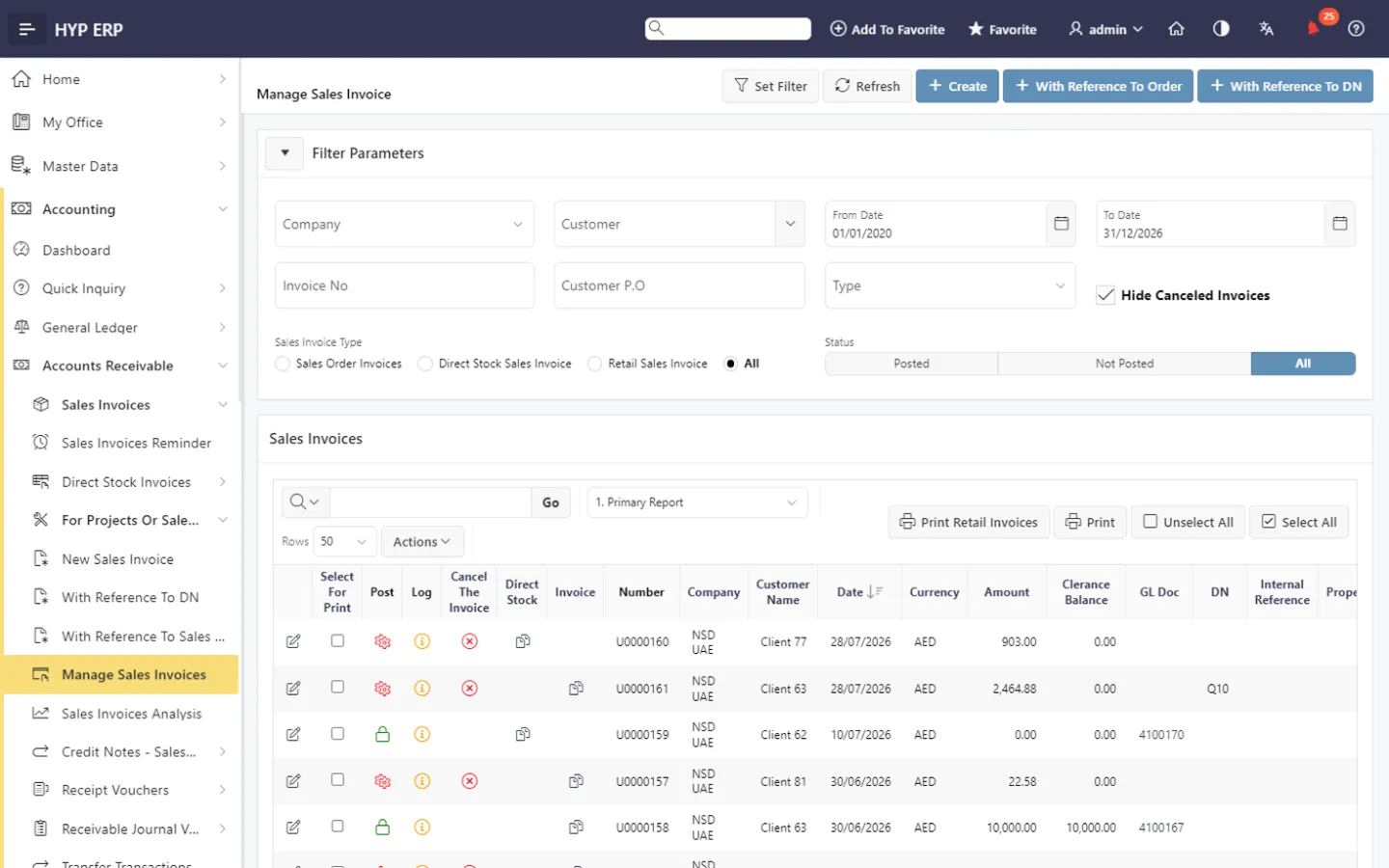
Record customer invoices, sales adjustments, returns and credit notes in receivables with their tax information, so VAT reporting reflects what was invoiced and what was reversed.
HYP ERP
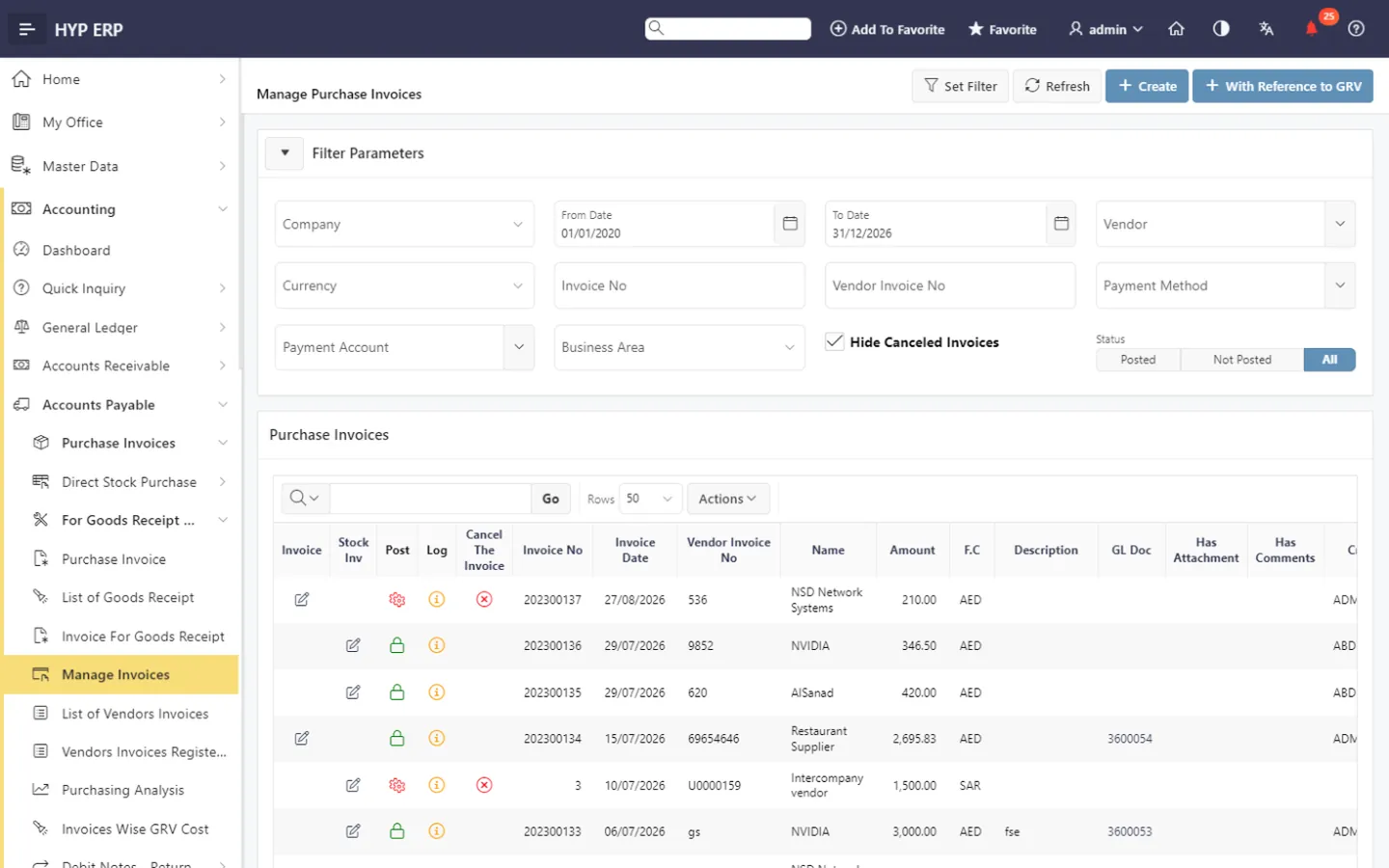
Maintain supplier invoices, debit notes and purchase accounting with the tax classification your business assigns to each purchase.
HYP ERP
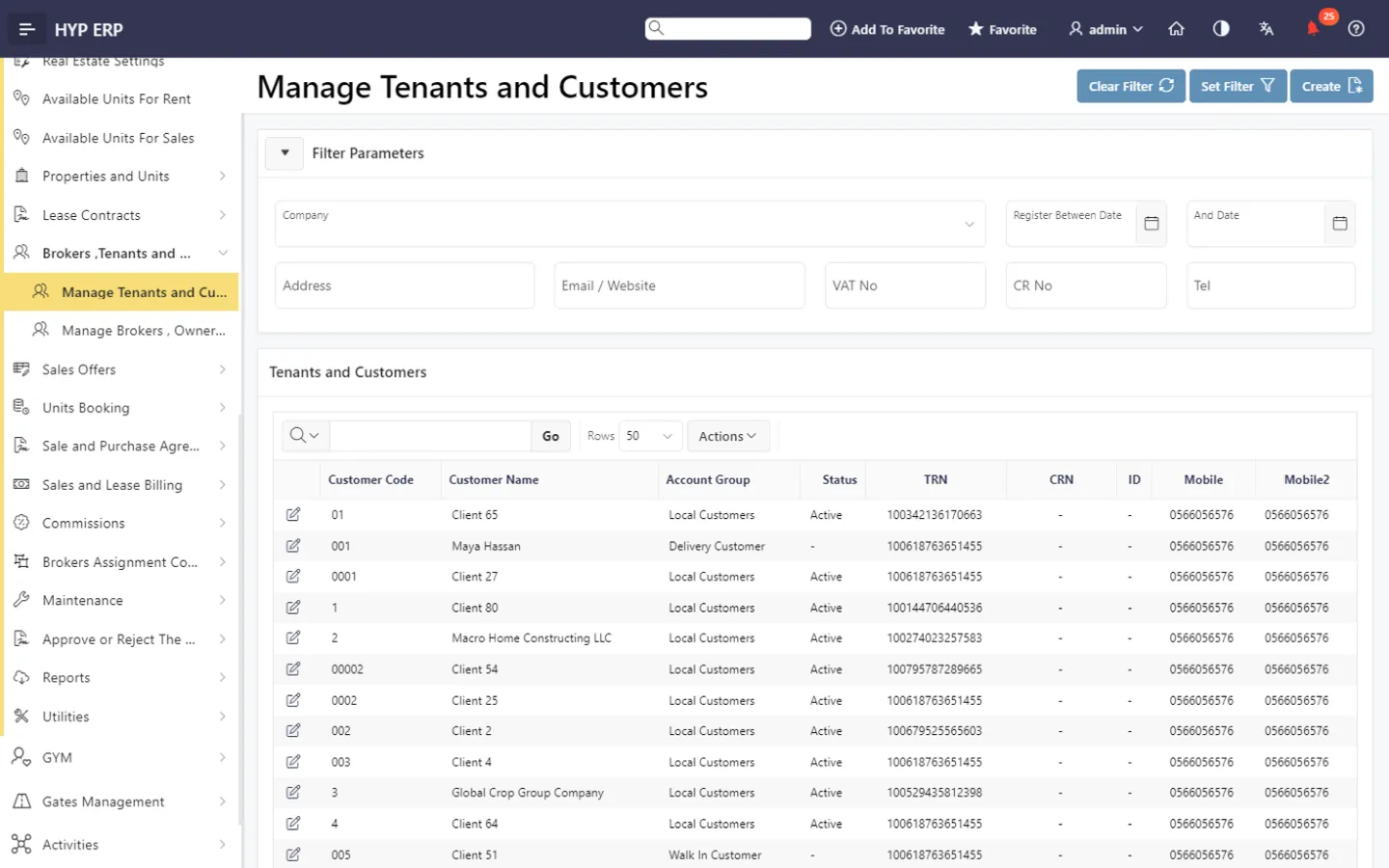
Keep registration and financial information on customer and supplier records, so the details used on invoices stay consistent across transactions.
HYP ERP
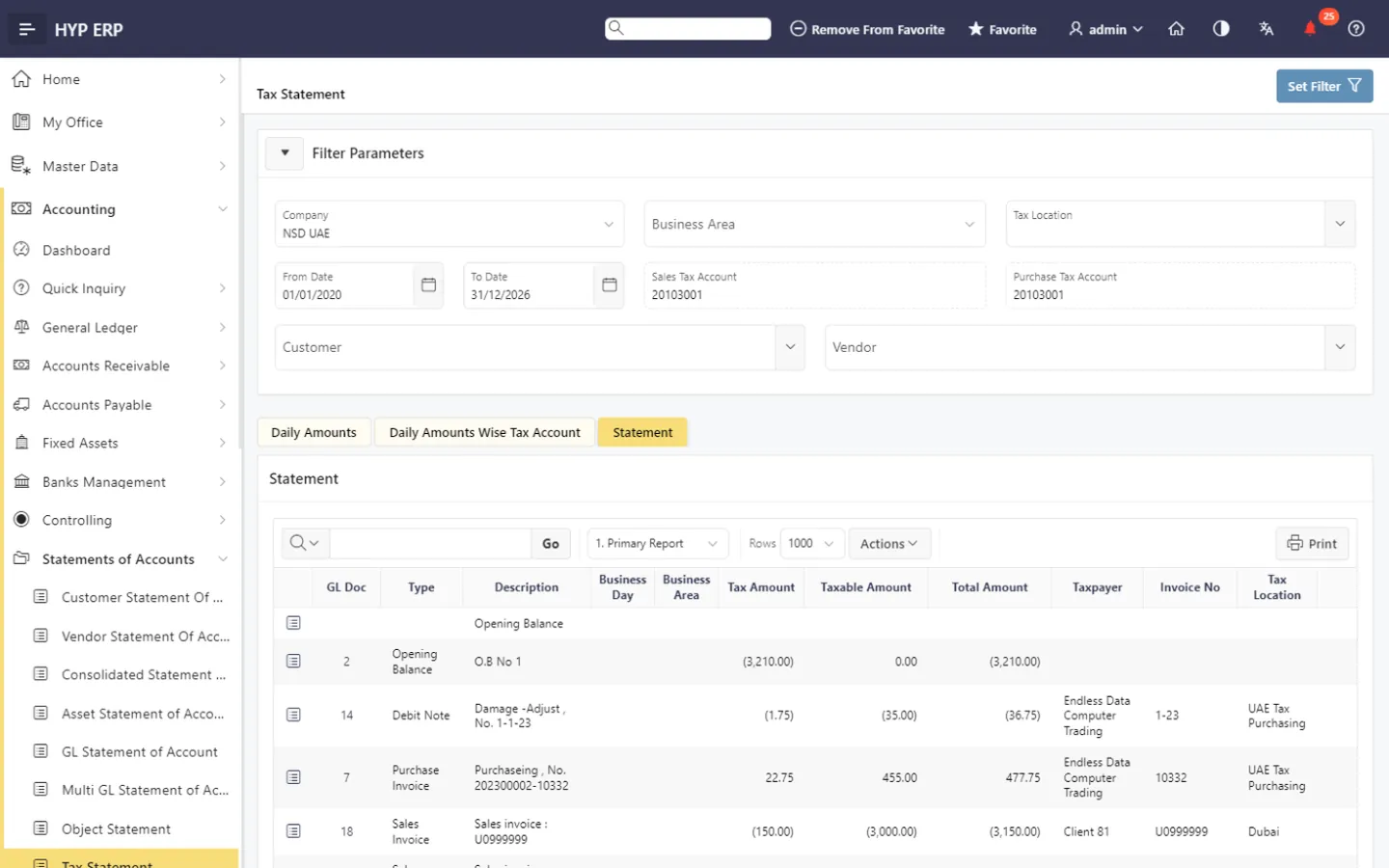
Compare transaction totals with tax statements, ledger inquiries and reports to reconcile VAT accounts during period-end review, with activity from several branches kept under the right legal entity and tax registration.
HYP ERP
HYP ERP is ready for the UAE e-invoicing system. Invoices are exchanged in the Peppol-based format through HYP's Accredited Service Provider (ASP) partner, Infinite IT Solutions, from the same records used for VAT.
HYP ERP
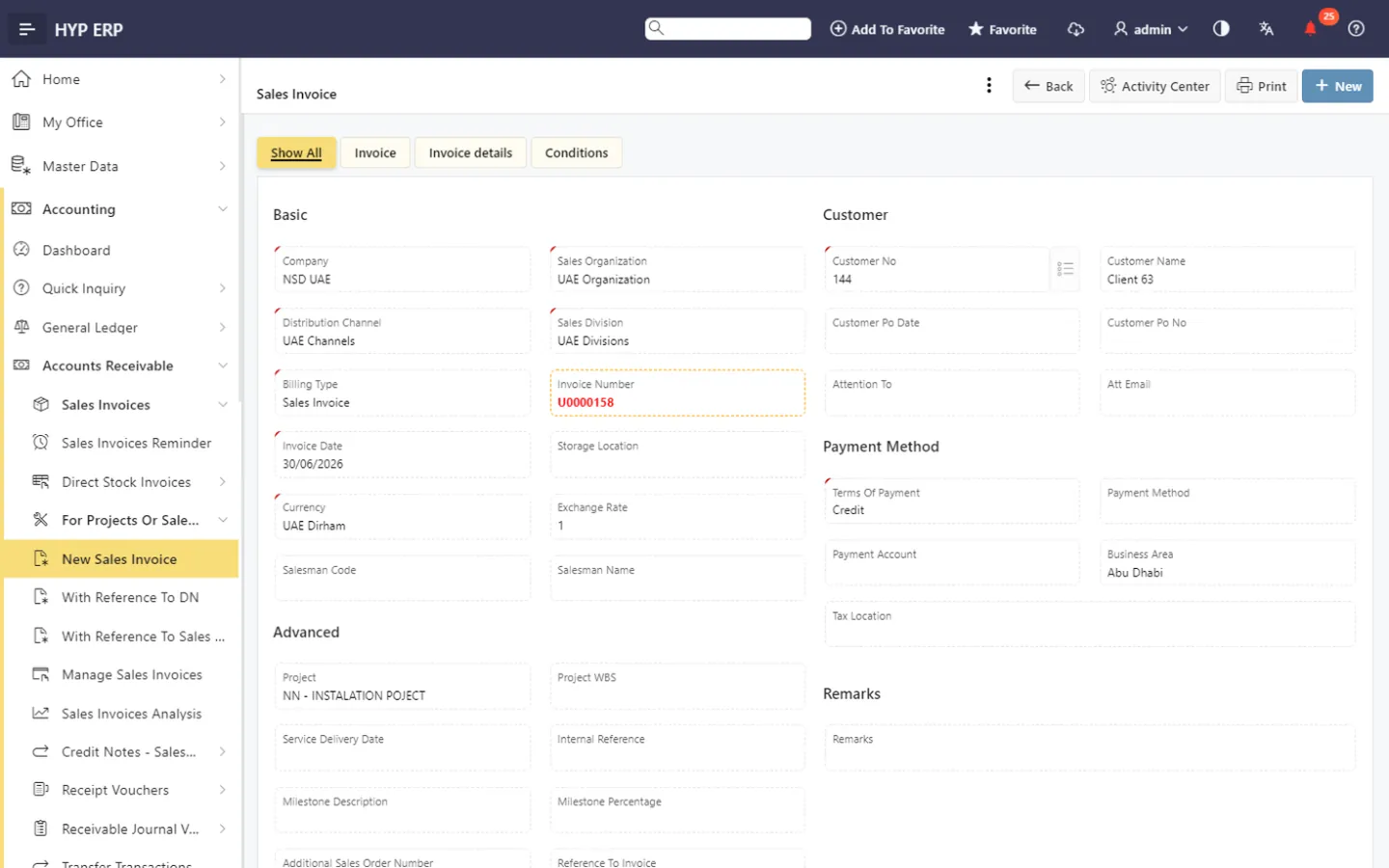
Record invoices, credit notes, debit notes and their tax classifications.
Check tax information against the transaction and the customer or supplier record.
Match transaction totals with accounting and tax statements.
Pass the reviewed figures to your VAT return process.
Benefits

From the blog
Article
Eight UAE VAT return mistakes to catch before you file, the October 2026 input tax changes, how to correct errors, and penalties since 14 April 2026.
Read the articleArticle
UAE SMEs must appoint an e-invoicing provider by 31 March 2027 and go live on 1 July 2027. Dates, scope, penalties and a month-by-month plan.
Read the articleArticle
A five-day month-end close checklist for UAE and Saudi finance teams, with VAT and e-invoicing steps, a worked bank reconciliation and evidence pack.
Read the articleThe UAE standard VAT rate is 5%. Zero-rated and exempt supplies follow specific legal conditions, so HYP ERP records the tax treatment your business determines for each supply rather than applying one default to everything.
Yes. HYP ERP records credit notes, returns and debit notes as controlled accounting documents with their tax information, so UAE VAT reports reflect adjustments as well as the original sales and purchase invoices.
No. HYP ERP prepares and reconciles the VAT records and reports; the VAT return itself is filed by your business with the FTA, using the reviewed figures from HYP ERP.
Yes. HYP ERP is ready for UAE e-invoicing: businesses issue structured e-invoices from their HYP ERP sales records, and the invoices pass through an Accredited Service Provider over the Peppol-based network, alongside the VAT records already kept in HYP ERP.
No. A VAT report in HYP ERP summarizes recorded transactions, and your business and its authorized tax advisers confirm the correct treatment of each supply before the UAE VAT return is prepared.
See how HYP ERP follows a VAT amount from the invoice to the reconciled tax account.