Article
Customer Credit Limits and Overdue Accounts: A Collections Routine for Distributors
Customer credit limit policy for distributors: how to set limits, what the policy should say, a collections routine by days overdue, and a worked example.
Accounts Receivable & Payable
Accounts Receivable & Payable tracks what customers owe you and what you owe vendors. Invoices, credit and debit notes, receipts and payments clear against each other, so every balance traces back to its documents.

Receivables and payables shape cash flow, vendor relationships and the accuracy of every statement. Managed in separate spreadsheets with approvals by email, collections slip, liabilities surface late and reconciliation becomes a monthly chase.
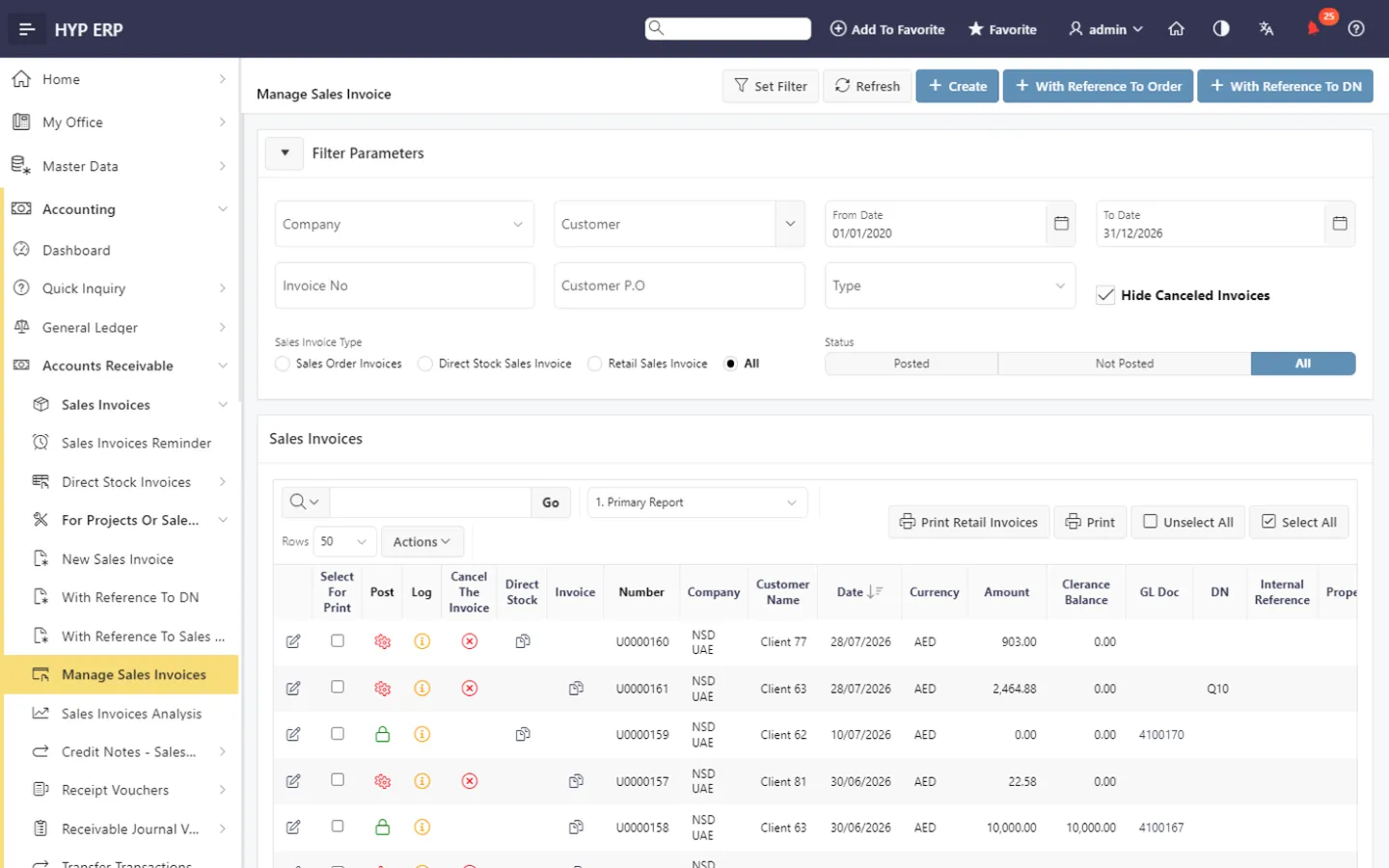
Issue direct sales invoices, or invoices linked to sales orders, delivery notes, projects and other operational activity, so different billing models, including stock-related flows, keep the same financial control.
 HYP ERP
Manage credit notes, sales returns, receipt vouchers, receivable adjustments and customer collections, keeping customer balances, outstanding amounts and transaction history organized and visible.
HYP ERP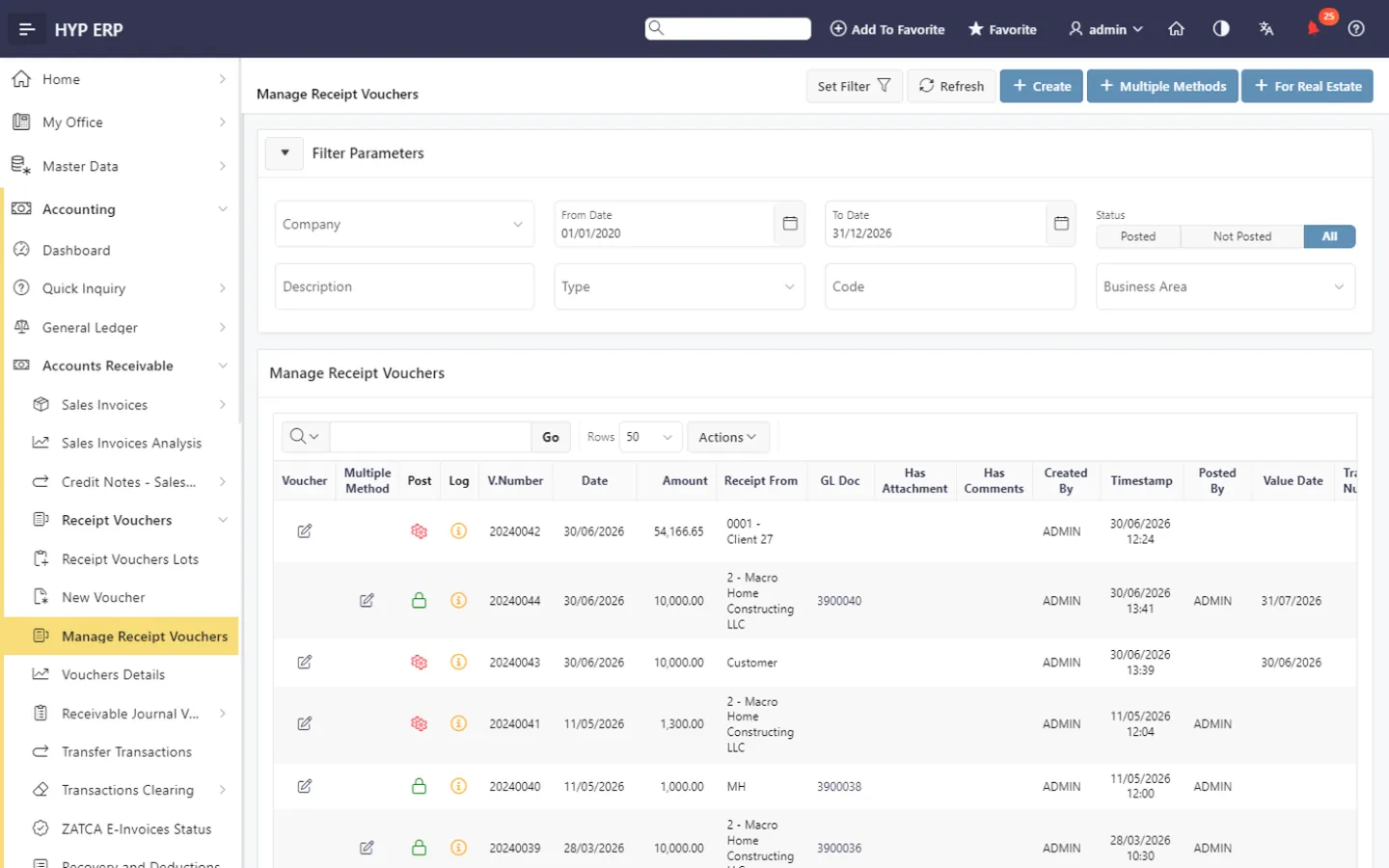
Record direct purchase invoices, or invoices linked to goods receipts, projects and referenced operational documents, together with debit notes, purchase returns, purchase-related liabilities and payable journal activity.
HYP ERP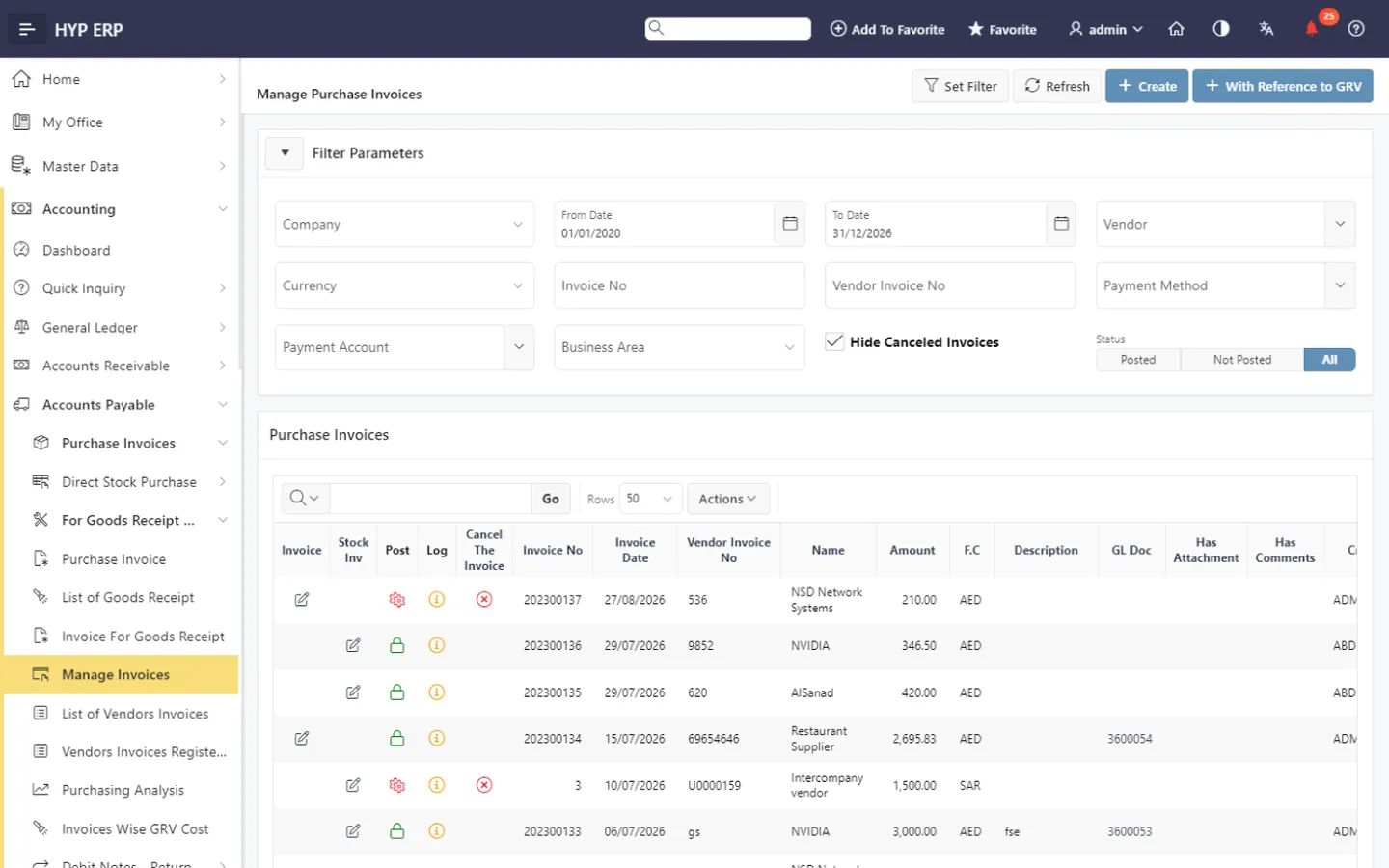
Route request-for-payment workflows for approval, issue payment vouchers and track payment status, approval progress and settlement activity, so vendor liabilities are reviewed before funds are released.
HYP ERP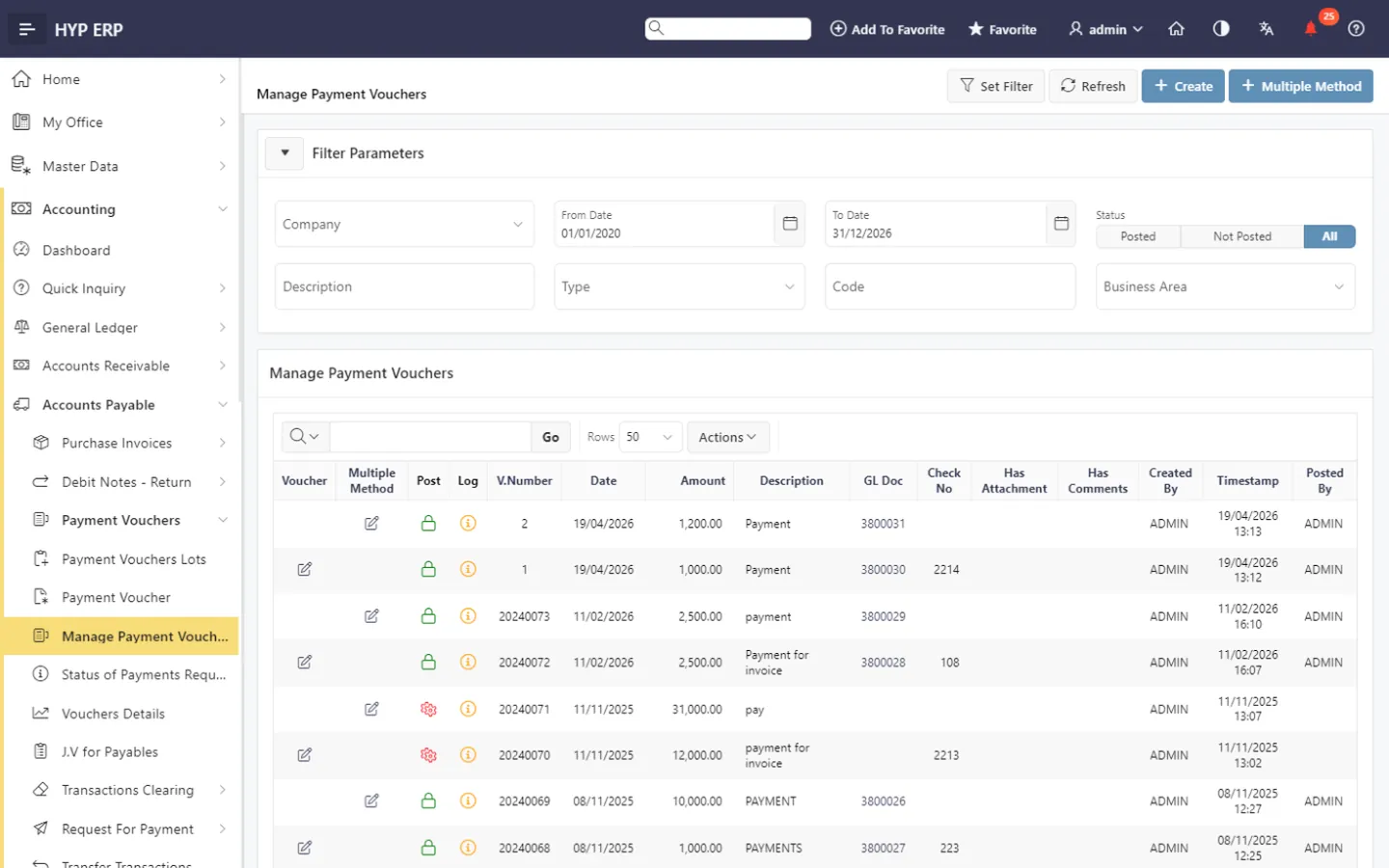
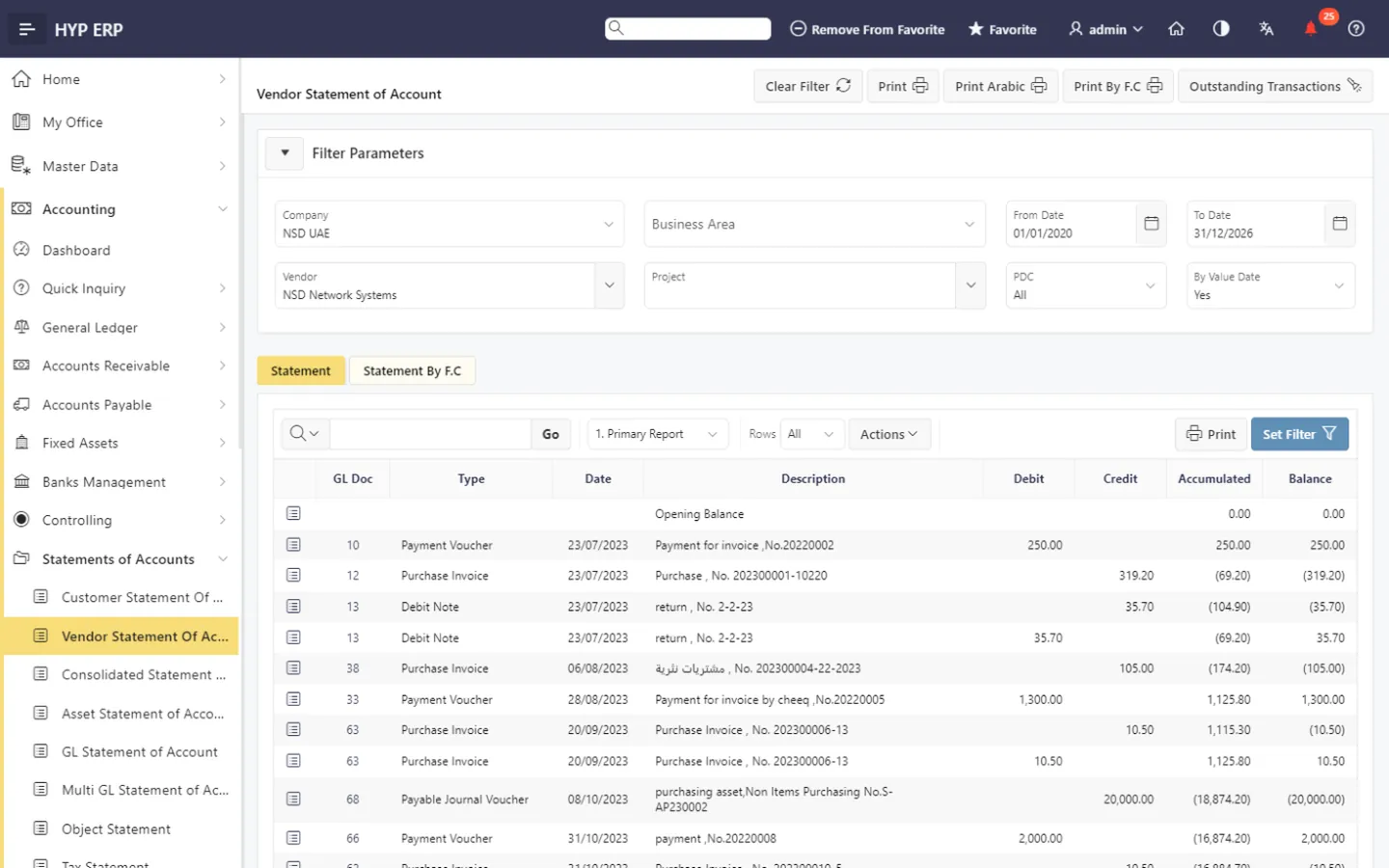
Clear receivable and payable transactions by matching invoices, vouchers, payments and adjustments, which keeps customer and vendor statements of account clean and reconciliation reliable.
HYP ERP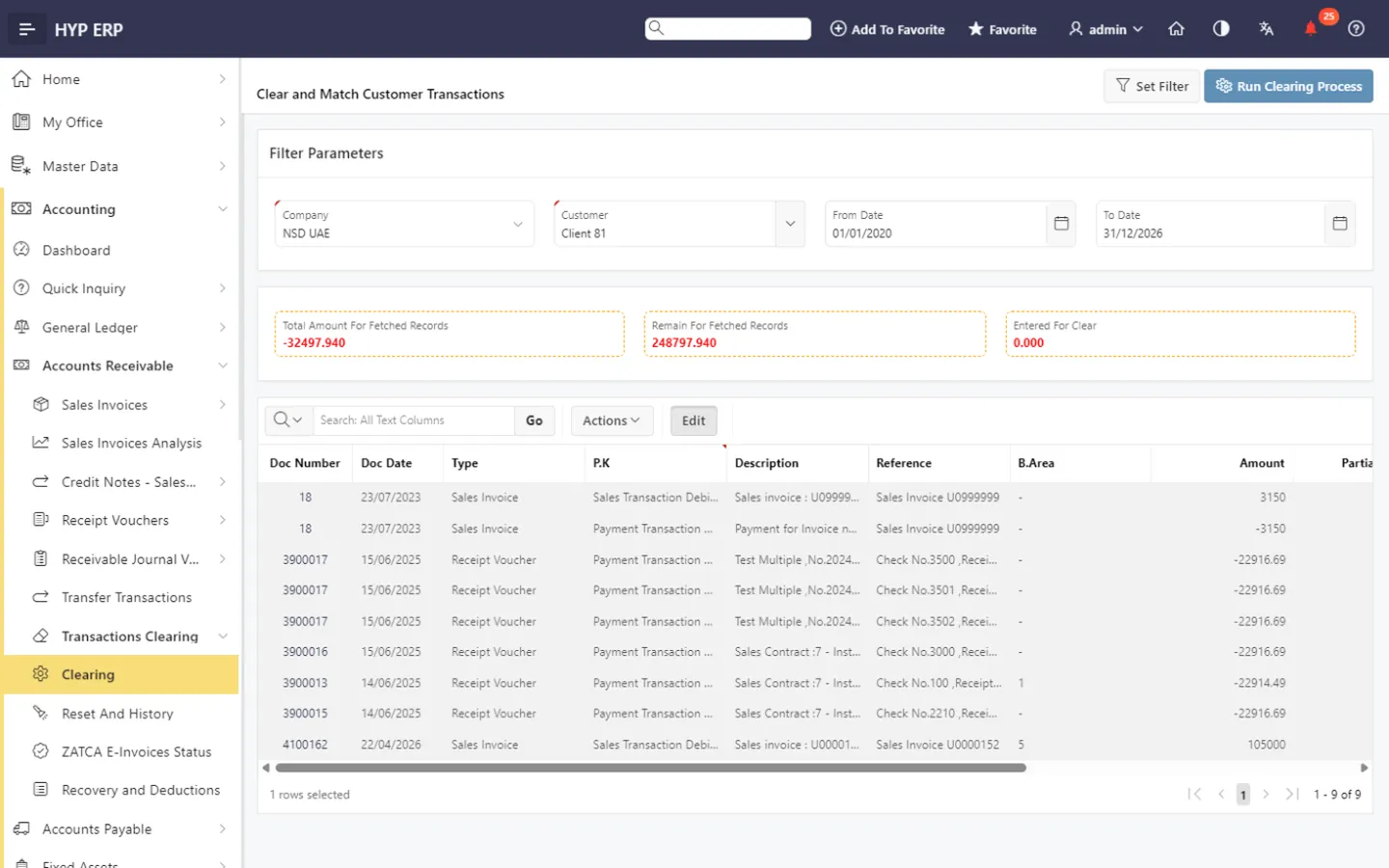
Track obligations beyond standard supplier invoices, including expense-related documents, utilities expenses, project-related requests, and recovery and retention amounts.
HYP ERP