Article
Bank Reconciliation Without Spreadsheets: A Simple Daily Routine
Bank reconciliation process: a 15-minute daily routine, causes of differences, a worked example, and how to import bank data without spreadsheets.
Banking, Fixed Assets & Cash Visibility
Banking, Fixed Assets & Cash Visibility keeps bank accounts, cheques, guarantees and fixed assets in the finance system. Teams reconcile bank activity, follow post-dated cheques and run depreciation, disposals and asset sales in the same ledger.

Banking shows liquidity and upcoming commitments. Fixed assets show capital value. In many businesses, cheque registers sit apart from the ledger, guarantees are tracked in folders and asset lists are updated once a year.
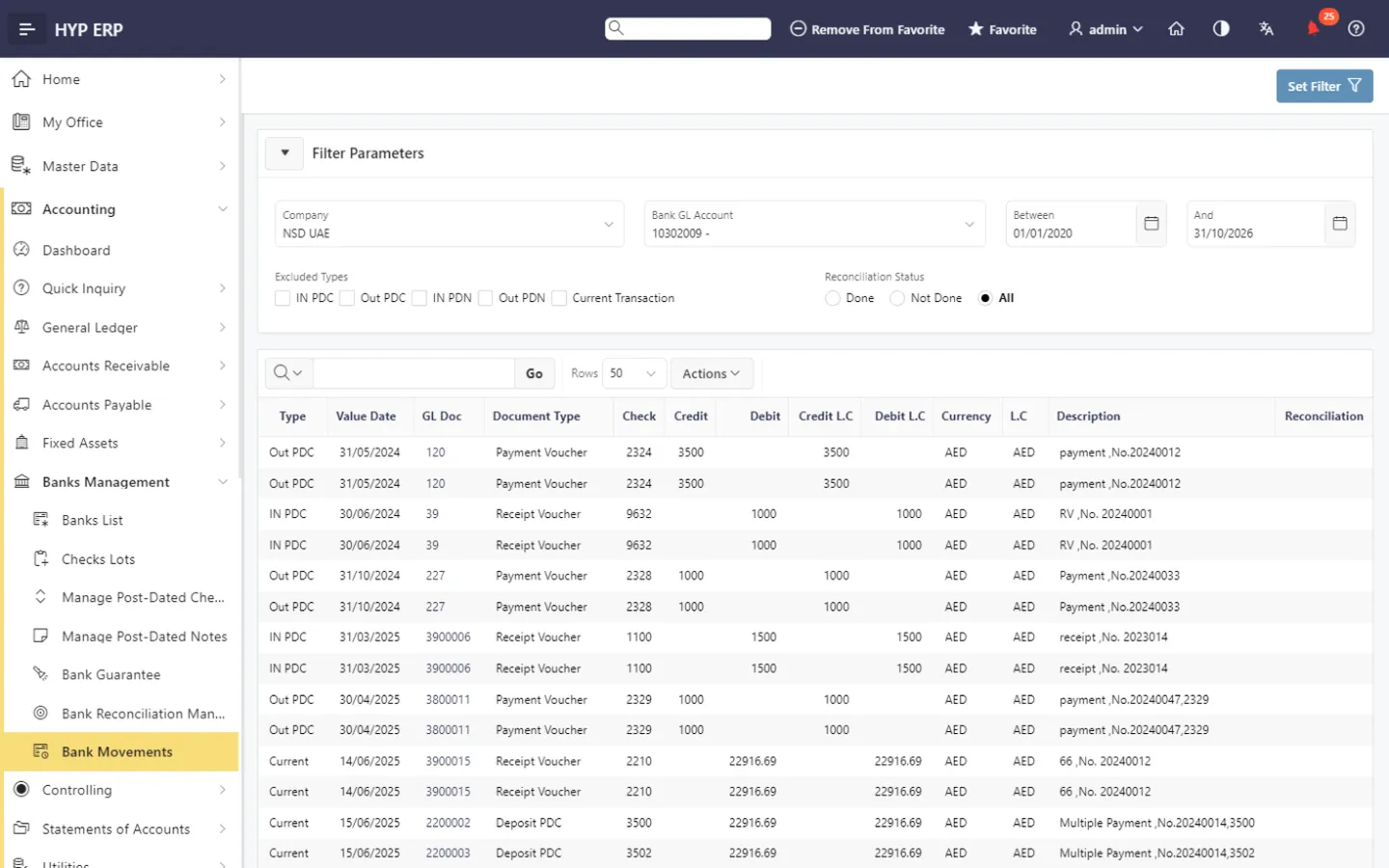
Maintain bank records, monitor bank movement and cheque-related activity, and see how money moves through the business and where the cash position stands, from the same finance environment.
 HYP ERP
Record post-dated cheques and post-dated notes, which remain common in regional business, and keep upcoming commitments, expected settlements and banking exposure in view, so obligations are not overlooked and future cash movement is easier to plan.
HYP ERP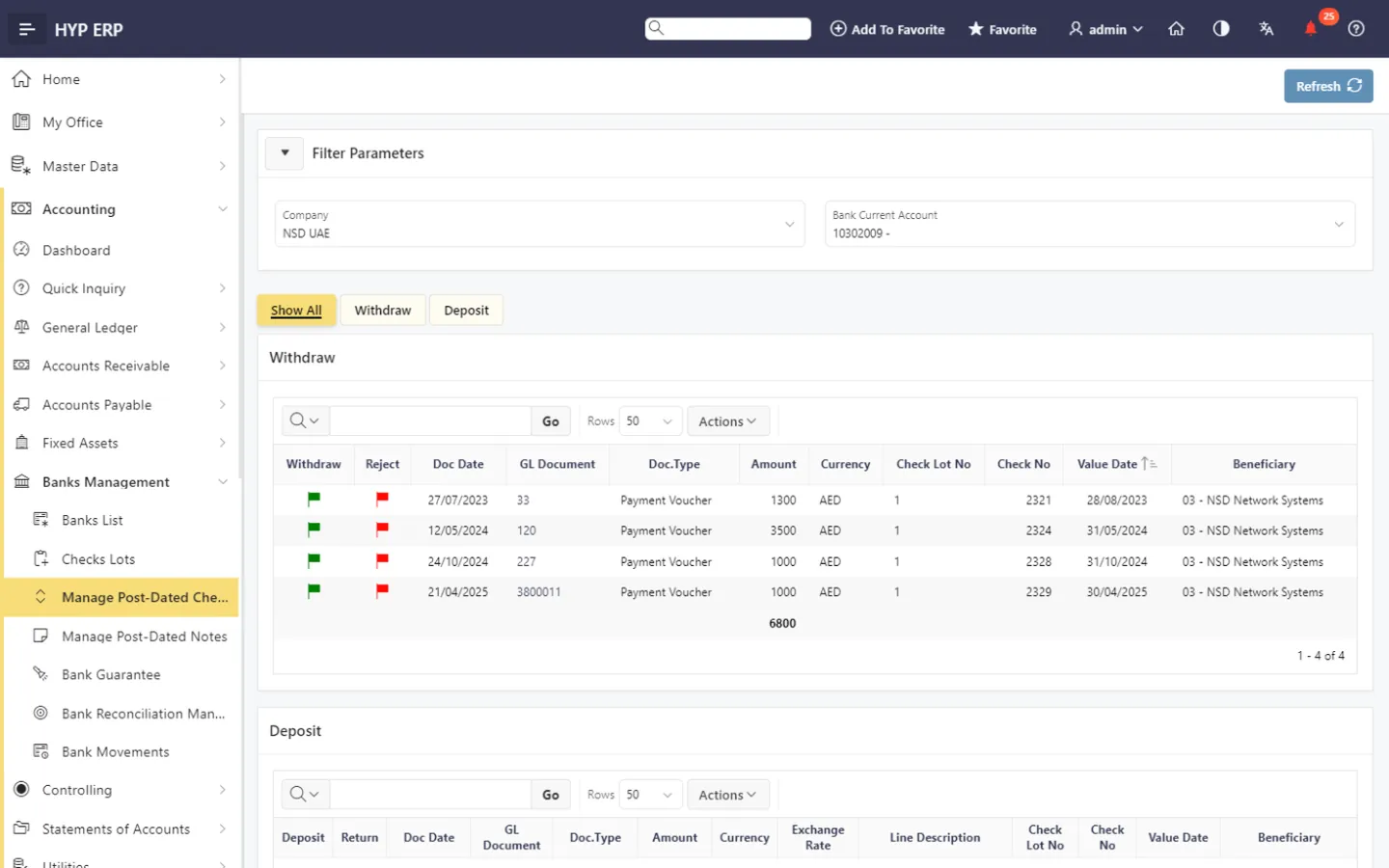
Manage bank guarantee records for project, procurement, contract and other commercial arrangements, with clear visibility over guarantee-related commitments and obligations.
HYP ERP
Compare recorded transactions with actual bank activity, identify discrepancies and follow them up, which matters most for businesses with several bank accounts, higher transaction volumes or complex inflows and outflows.
HYP ERP
Register assets and their opening balances and keep asset values and accounting treatment consistent with the wider finance platform across the full asset lifecycle.
HYP ERP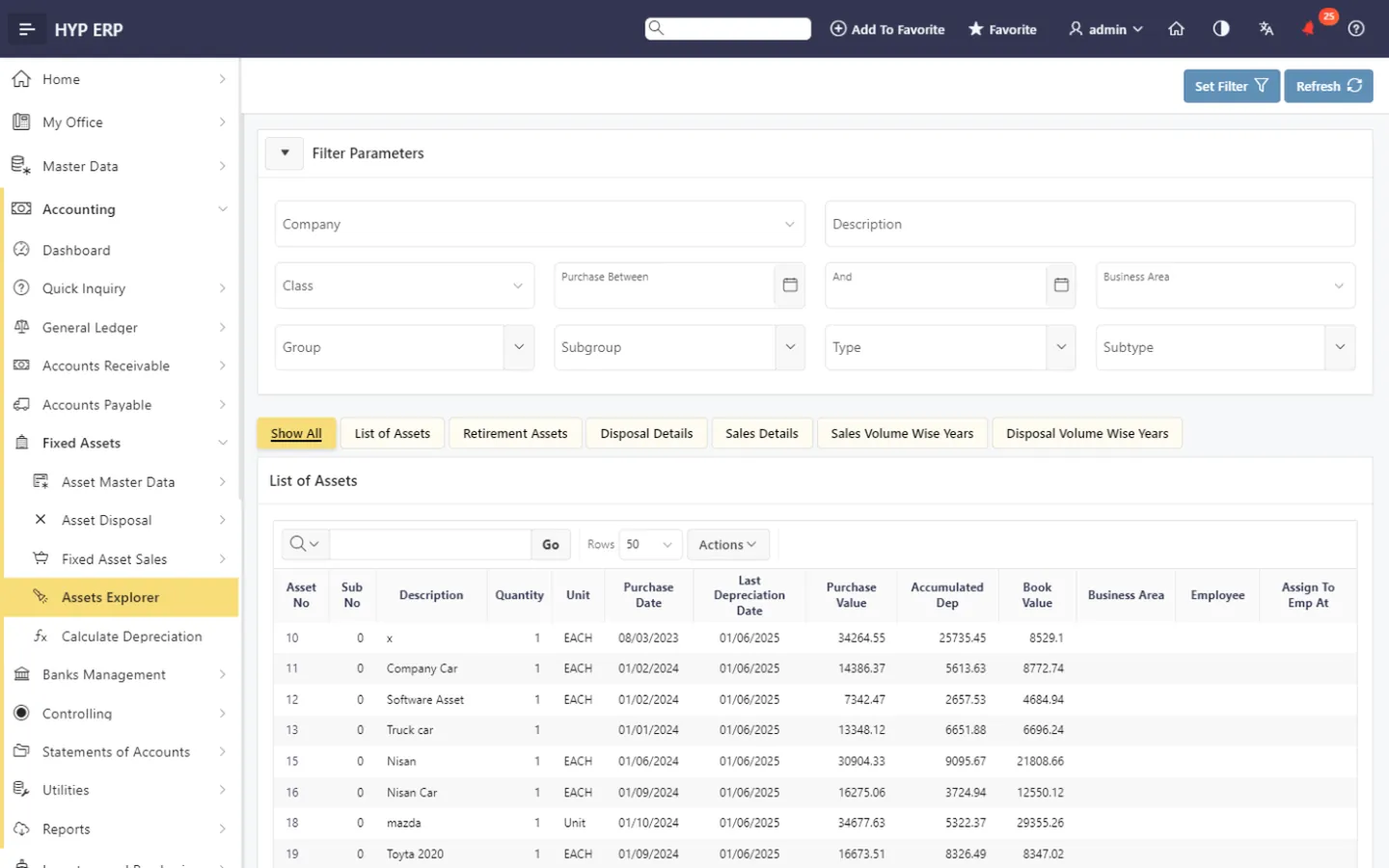
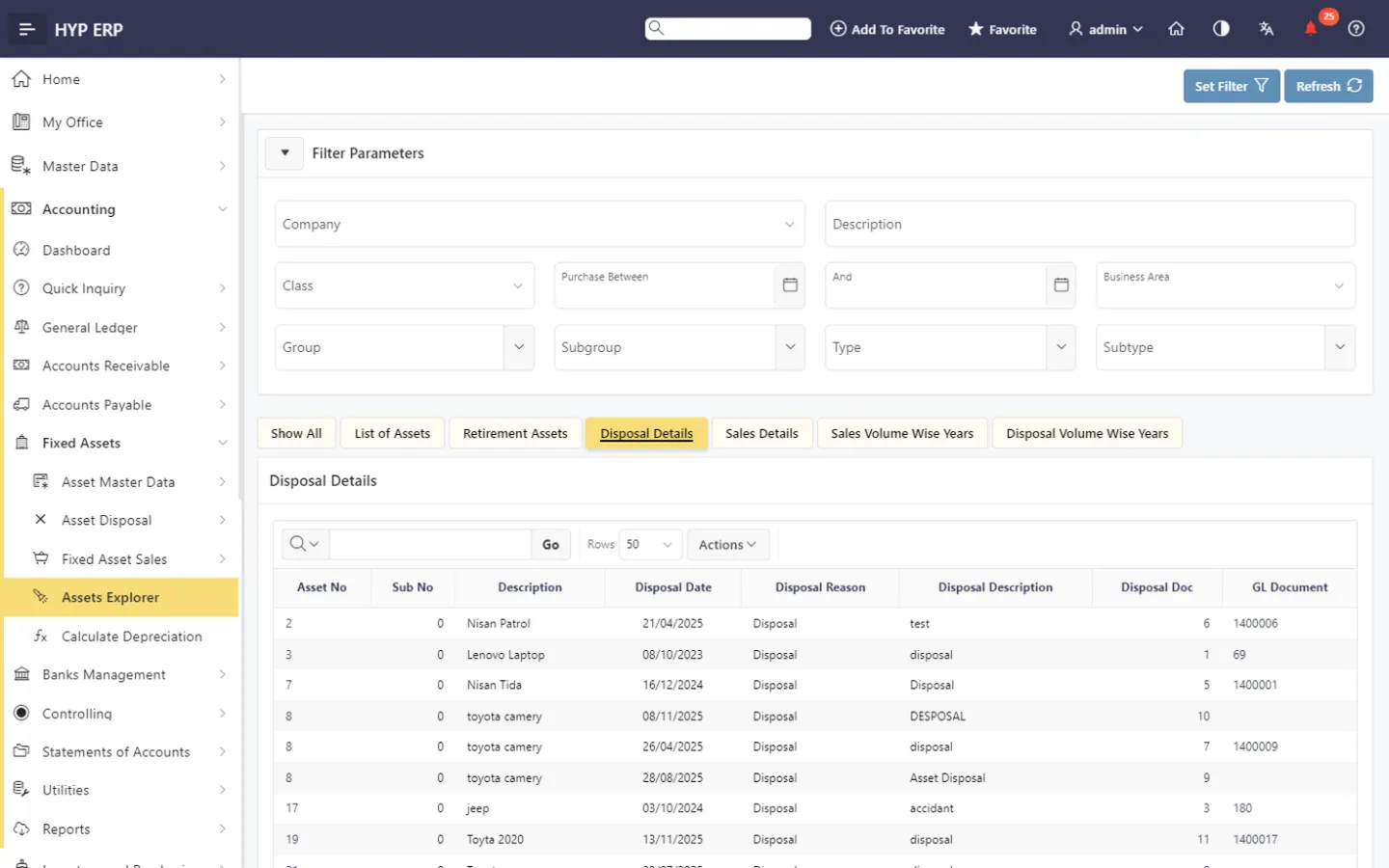
Calculate depreciation, record disposal events and process fixed asset sales in a structured way, so asset records and capital asset reporting stay accurate.
HYP ERP