
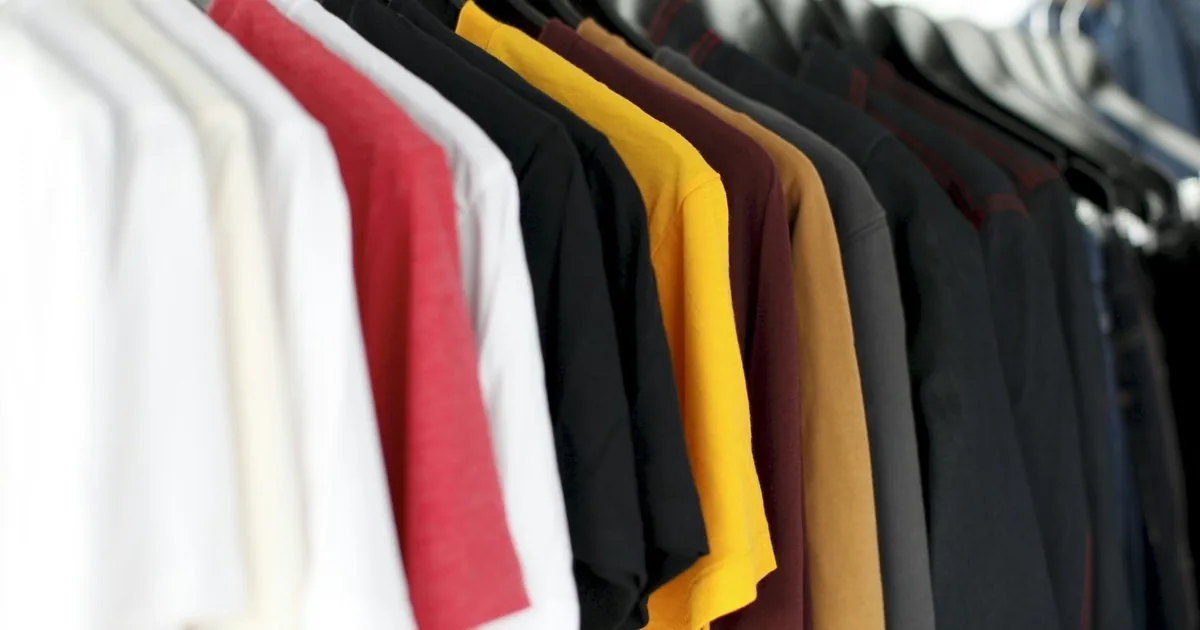
Fashion is harder than most retail because one design becomes dozens of items. A shirt in three colours and five sizes is 15 items, and it sells for one season. If the system only knows "linen shirt", you cannot see that one branch is out of medium while another holds 25.
This guide covers how to structure styles, colours and sizes, how to plan size curves and branch allocation, how to read sell-through during the season, and how to handle markdowns and leftover stock. A worked example follows one style through a summer season in a UAE chain.
How should you set up sizes and colours in your system?
Use a three-level structure: style, colour and size. The style holds what all variants share, such as description, supplier, season, category and cost. Each colour and size combination is a separate stock item with its own code and barcode.
| Level | Example | What it carries |
|---|---|---|
| Style | LS-2604, men's linen shirt | Supplier, season, category, cost, retail price |
| Colour | White, navy, sand | Colour code, images |
| Size | S, M, L, XL, XXL | Size scale, position in the size curve |
| Variant (SKU) | LS-2604-NAV-L | Own stock, own barcode, own sales history |
Every variant needs its own barcode. GS1, which issues GTIN barcodes, states that each size, colour and combination of the two is a separate product variation that needs its own GTIN. One barcode for all sizes means the till cannot tell which size was sold, and your stock by size is wrong from the first sale.
Define size scales once and reuse them: XS to XXL for tops, waist sizes for trousers, EU or UK sizes for shoes, age ranges for kidswear. A matrix entry screen, with sizes across and colours down, lets buyers enter a purchase order for a style in one grid instead of 15 lines.
Report at style level for buying decisions and at variant level for replenishment and transfers.
How do you plan size curves and branch allocation?
A size curve is the share of a style's units bought in each size. It should come from your own sales history for that category, not from the supplier's pre-packed ratio. Pre-packs are cheaper to buy but often carry too many small and extra-large sizes for your customers.
Branches differ, so allocation should too. A mall branch with tourist traffic may sell more medium and large; a branch in a residential area may sell more extra-large. Keep a size curve per branch for each main category, and update it after each season.
Allocate in two steps:
- Initial allocation. Send 50% to 70% of the buy to branches at launch, split by each branch's sales share and size curve. Hold the rest in the warehouse.
- Replenishment. Each week, top up branches from the warehouse based on what sold, by size. The branch that sells medium fastest gets the medium.
Holding back part of the buy is what makes the season correctable. If everything goes to branches on day one, the only way to fix a mistake is a transfer between branches, which costs more and takes longer.
Set a minimum display quantity per variant per branch, such as two units of each core size. Below that, a customer cannot try the item on and the size is effectively out of stock.
What should you watch during the season?
Three measures tell you how a style is doing, and all three should be read by style, colour, size and branch:
| Measure | Formula | What it tells you |
|---|---|---|
| Sell-through | Units sold ÷ units received | How fast the style is selling against the buy |
| Weeks of cover | Units in stock ÷ average weekly units sold | How long current stock will last at current sales |
| Broken size runs | Core sizes at zero in a branch while other sizes are in stock | Where you are losing sales because a size is missing |
Compare sell-through with the plan for the week. A summer style planned to sell 60% at full price over 10 weeks should be near 30% by week five. If it is at 15%, act early: move stock to the branches that sell it, change the display, or plan the markdown. If it is at 50%, reorder if the supplier can deliver in time.
Fix broken size runs with transfers. A branch that has sold out of medium and large but still holds extra-large has lost its best sizes. Pull medium and large from a slow branch and send back the excess extra-large. Every transfer should have a sending and a receiving step, so stock in transit is visible and nothing disappears between branches.
How do you handle markdowns and end-of-season stock?
Plan markdowns before the season starts, not when the stock room is full. Set the full-price selling period, the first markdown and the clearance date for each season. In the UAE, large sale events such as the summer sales and the Dubai Shopping Festival shape when shoppers expect discounts, so line up your calendar with them.
Mark down by style and colour, based on sell-through and weeks of cover, not across the whole range. A style that is selling at full price does not need a discount because the rest of the season is.
At the end of the season, you have three choices for what remains: a final clearance, an outlet branch, or carrying the stock to the same season next year. Basic styles may carry over; fashion styles usually lose value quickly.
Leftover stock also has an accounting effect. Under IAS 2, inventory is measured at the lower of cost and net realisable value, meaning the expected selling price less the costs to sell. If clearance prices fall below cost, write the stock down to net realisable value in the period it happens, not when it finally sells.
What does one style's season look like? A worked example
A UAE fashion chain with four branches buys a men's linen shirt for summer: 600 units of one colour at a landed cost of AED 45 each, AED 27,000 in total. The retail price is AED 149 including 5% VAT, or AED 141.90 net. The size curve comes from last summer's sales:
| Size | S | M | L | XL | XXL | Total |
|---|---|---|---|---|---|---|
| Share of buy | 10% | 25% | 30% | 22% | 13% | 100% |
| Units | 60 | 150 | 180 | 132 | 78 | 600 |
In week four, the Dubai Mall branch has sold out of medium and is down to two large, while the Al Ain branch holds 22 medium and 25 large and is selling slowly. The merchandiser transfers 12 medium and 12 large from Al Ain to Dubai Mall, and moves 8 extra-large back the other way.
By the end of the season the results are:
| Stage | Units | Price incl. VAT (AED) | Net price (AED) | Net sales (AED) |
|---|---|---|---|---|
| Full price | 380 | 149.00 | 141.90 | 53,923.81 |
| First markdown, 30% off | 140 | 104.30 | 99.33 | 13,906.67 |
| Total sold | 520 | 67,830.48 |
Cost of the 520 units sold is AED 23,400, so the gross margin is AED 44,430.48, or 65.5% of net sales. Full-price sell-through was 63%, and total sell-through 87%.
Eighty units remain, carried at AED 3,600. The clearance price is 70% off, AED 44.70 including VAT, or AED 42.57 net, which is below the AED 45 cost even before selling costs. The chain writes the 80 units down by about AED 2.43 each, AED 194 in total, in the month it sets the clearance price.
The transfer in week four is what kept full-price sell-through above 60%. Without it, Dubai Mall would have spent the peak weeks without its two best sizes, and those units would have reached markdown in Al Ain.
These figures are illustrative.
What should apparel retailers check each week?
What does HYP see at apparel retailers?
HYP's implementation team sees the same problems at fashion and footwear retailers in the UAE and Saudi Arabia. Items are created as one code per style, or with sizes typed into the description, so stock by size cannot be reported. Pre-packs are bought from suppliers and sent to branches unopened. Transfers between branches are arranged by phone and recorded later, so stock in transit goes missing. And markdowns are decided when the stock room runs out of space.
The retailers that manage this well set up every style as a matrix of colours and sizes from day one, with a barcode per variant. They hold back part of each buy, replenish weekly by size, and run a weekly transfer review between branches. Their markdown calendar is fixed before the season starts, and they review sell-through every week against it.
HYP's Apparel & Fashion Retail solution handles style, colour and size matrices, branch allocation, transfers and replenishment by size, and sell-through reporting by style, colour, size and branch. See how it works on our Apparel & Fashion Retail page.
Related reading: Online Orders and Store Stock: Selling From One Inventory Without Overselling, and Returns, Exchanges and Refunds: Store Rules That Stop Stock and Cash Gaps.